
Dental Implants in Zug – Your Permanent Replacement Teeth
artificial tooth roots
Very good long-term prognosis
Absolutely harmless to health
High-quality dentures for lost teeth
High wearing comfort and aesthetics
indistinguishable from natural teeth
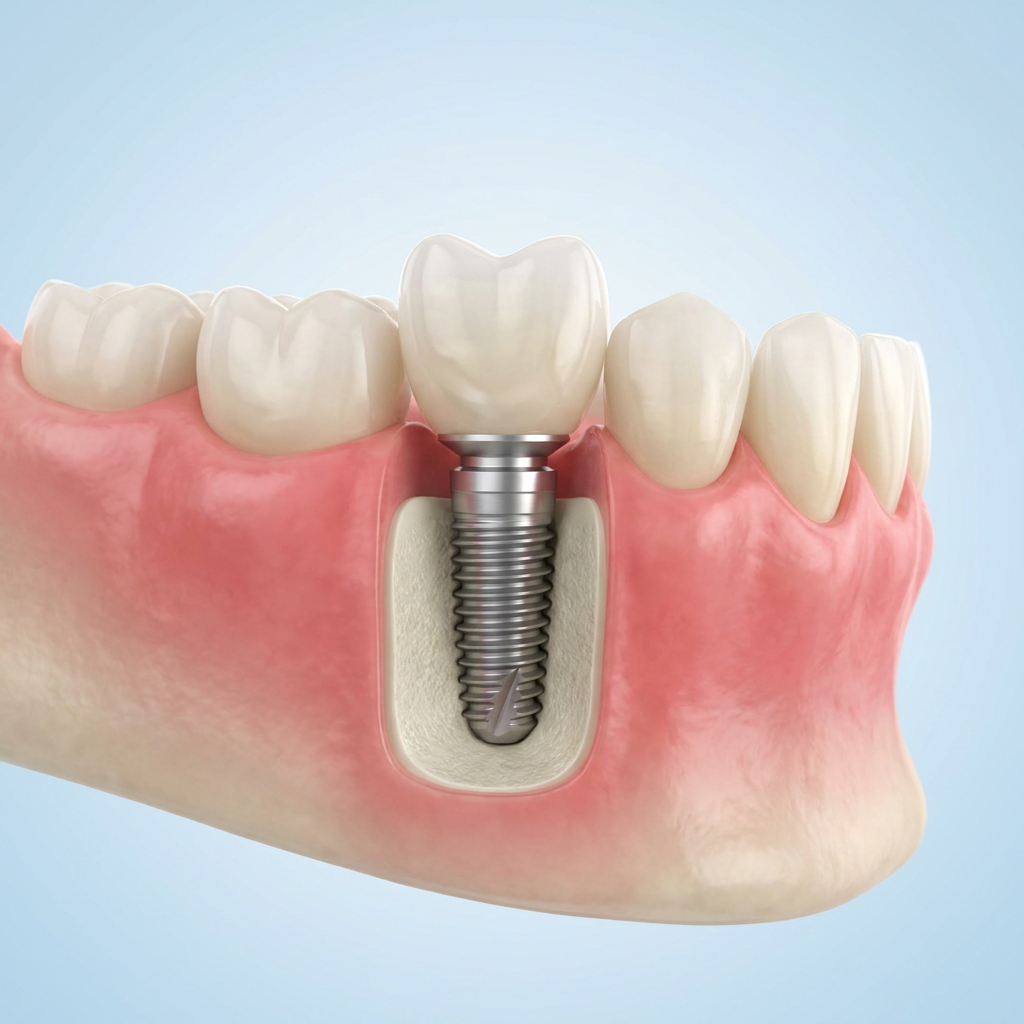
What is a dental implant?
With good oral hygiene, high-quality implants can fulfill their function until the end of the user's life. Depending on the individual scope of treatment and your personal wishes, implantations are carried out under local anesthesia, rarely under general anesthesia. The lower part of the implant is modeled on a screw similar to a tooth root. The dentist only anchors this in the jaw. The upper part of the workpiece is intended to carry the visible, actual tooth replacement, which will be as resilient as the natural tooth was before once it has finally healed.
Advantages Over Bridges and Removable Dentures
Implants are just as secure as your natural teeth—without the need to grind down healthy adjacent teeth. They preserve the jawbone, allow you to bite down firmly, and feel natural. Implants are the most durable and reliable solution for tooth loss.
The Implant Treatment Process
In general, the procedure, which is usually performed on an outpatient basis, is a safe, often proven and very well tolerated treatment method. The treatment procedure is carried out in a sterile environment and takes between 20 minutes and two hours, depending on the extent and/or degree of difficulty. Usually after the healing process is complete, a bridge, crown or, if necessary, a fastening element for removable or fixed dentures is screwed onto the artificial tooth roots. The visible dental crown is visually indistinguishable from a natural tooth and the color is matched to the remaining teeth. Implants are the most durable and reliable solution to many dental problems.
Longevity and Care of Dental Implants
With good oral hygiene and regular professional dental cleanings, implants can last for many decades—often a lifetime. Consistent care is crucial, because the gums can become inflamed even around implants. We’ll show you exactly what matters.
-
Most adults whose jaw growth has stopped are suitable candidates. The key factors are sufficient bone mass and healthy gums—we assess both using modern 3D diagnostic technology.
-
No. The procedure is performed under local anesthesia, so you won't feel any pain during the implantation. Even after the treatment, any mild discomfort can be easily managed with over-the-counter pain relievers.
-
Even if the jawbone has receded over the years, implant placement is usually still possible. Through a gentle, minimally invasive bone grafting procedure (augmentation), we can strengthen the foundation again so that the implant is securely and permanently anchored.
-
The cost depends on the initial condition, materials, and the amount of work involved. Before treatment begins, we will provide you with a detailed, binding cost estimate—with no hidden charges.