
Treating TMJ Problems in Zug – CMD & Teeth Grinding
Detailed patient consultation on the topics of temporomandibular joint symptoms, pain therapy, functional spectrum and occlusion
Professional functional diagnostics using clinical instrumental and manual functional analyses
Coordination, diagnostics and interdisciplinary collaboration between dentists, doctors, alternative practitioners and therapists from all disciplines (radiology, maxillofacial medicine, orthodontics, ENT, osteopathy, orthopaedics, pain and physiotherapy)
High-quality dental restorations
Modern pain therapy and prevention programs

What is CMD (craniomandibular dysfunction)?
CMD refers to dysfunction of the temporomandibular joint and the masticatory muscles. Because the jaw, head, and neck are closely interconnected, CMD often manifests in completely different areas—many people affected spend a long time searching in vain for the cause. As you can see for yourself, temporomandibular joint disorders present a very complex clinical picture with many different symptoms that must be taken very seriously.
Common symptoms: from jaw clicking to headaches
Common signs include clicking or grinding in the temporomandibular joint, pain when chewing, limited mouth opening, tension in the neck and shoulders, headaches, or ringing in the ears. Worn-down teeth are also a sign of nighttime teeth grinding. Other possible signs include limited jaw opening, chronic head, neck, throat, and back pain that does not respond to treatment, as well as pain in the masticatory muscles. Loose teeth, tooth displacement, asymmetrical mouth opening, a dislocated or painful temporomandibular joint, an unclear bite, and dental defects—including receding gums—can also indicate TMD.
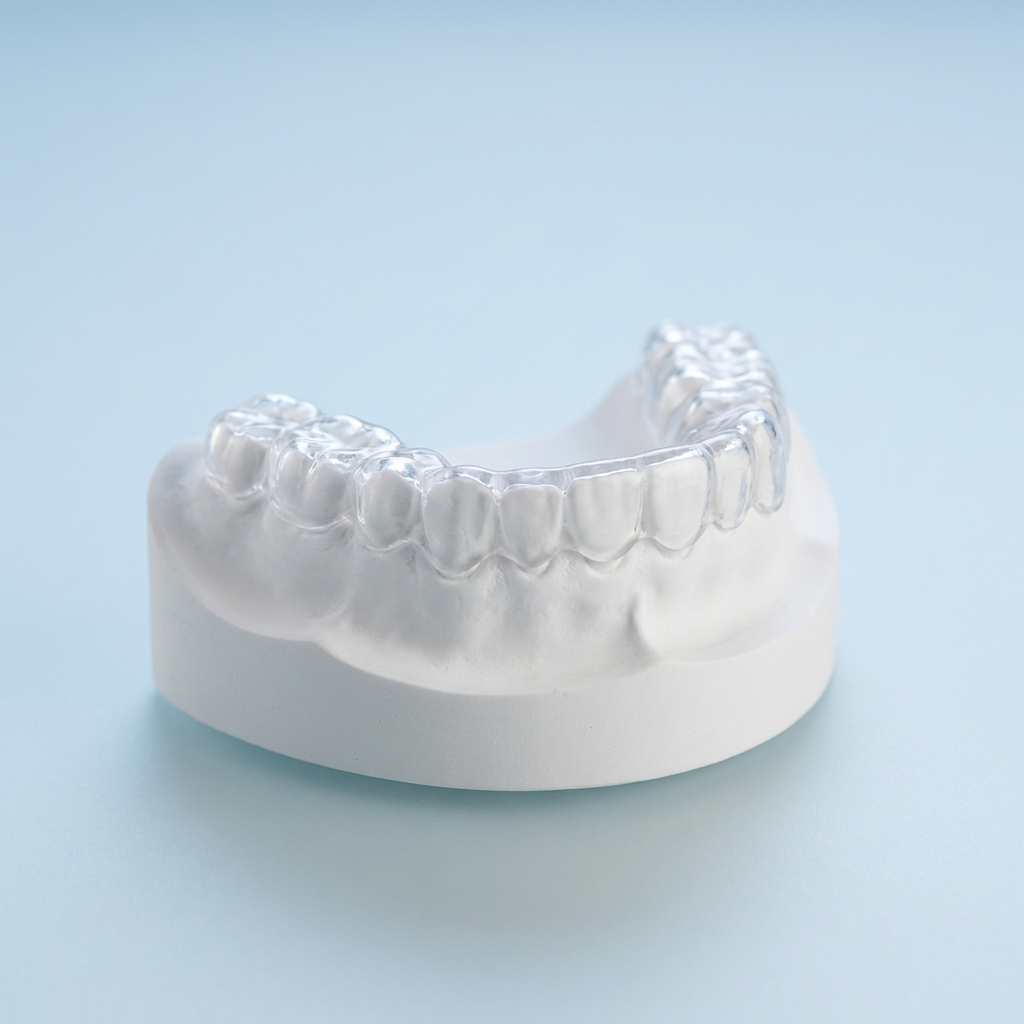
Teeth Grinding (Bruxism) and Night Guards
Many people unconsciously grind their teeth at night—often due to stress. A custom-made bite guard protects the teeth, relieves pressure on the temporomandibular joint, and noticeably relaxes the chewing muscles. In many cases, so-called bite splints—which are precisely customized to fit the jaw—are recommended for therapeutic purposes. These gently correct the distribution of force and relieve pressure on the temporomandibular joints.
TMJ disorders are so painful and can so severely limit your quality of life that sooner or later you’ll end up visiting the dentist. If you recognize or are experiencing the symptoms mentioned above—or if you’re unsure—please call us to schedule an appointment. We’re here to put your mind at ease!
Diagnosis and Treatment at Our Practice
We thoroughly examine your temporomandibular joint, muscles, and bite (functional analysis) and use this information to create your treatment plan—ranging from splint therapy to targeted bite correction. When necessary, we collaborate with physical therapists. The sometimes challenging diagnostic evaluation of various symptoms affecting the head and neck region—as well as those affecting other parts of the body—also requires close interdisciplinary collaboration among medical specialists, dentists, alternative practitioners, and therapists from a wide range of disciplines.
Frequently Asked Questions About TMJ Problems
-
Typical signs include jaw pain or stiffness in the morning, worn-down chewing surfaces, and comments from your partner. We can immediately identify signs of teeth grinding during an examination.
-
Early signs, such as jaw clicking or morning stiffness, may be an indication of a problem, but a definitive diagnosis always requires a thorough functional analysis at our practice.
-
If CMD is the cause, many patients report significant improvement. We provide a reliable prognosis following the functional analysis.
-
Stress is one of the most common triggers for nighttime teeth grinding and tension in the masticatory muscles, often in combination with other factors such as an improper bite.